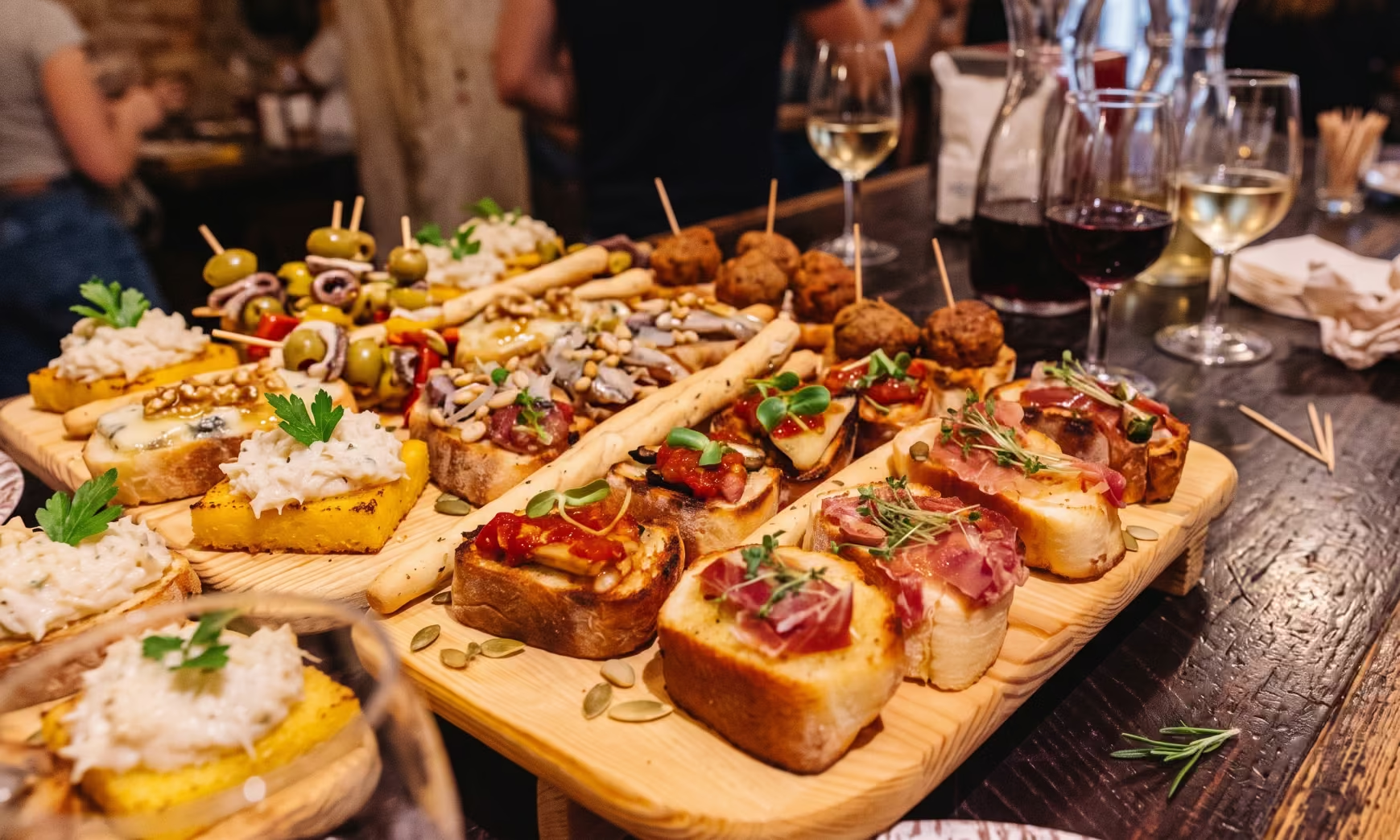
Cicchetti are the small bites Venetians eat standing at the counter of a bacaro, usually with a small glass of wine. A slice of bread with whipped cod, a single meatball on a stick, a fried sardine. Nobody sits down, nobody orders a full meal, and most people move on to the next bar after one or two.
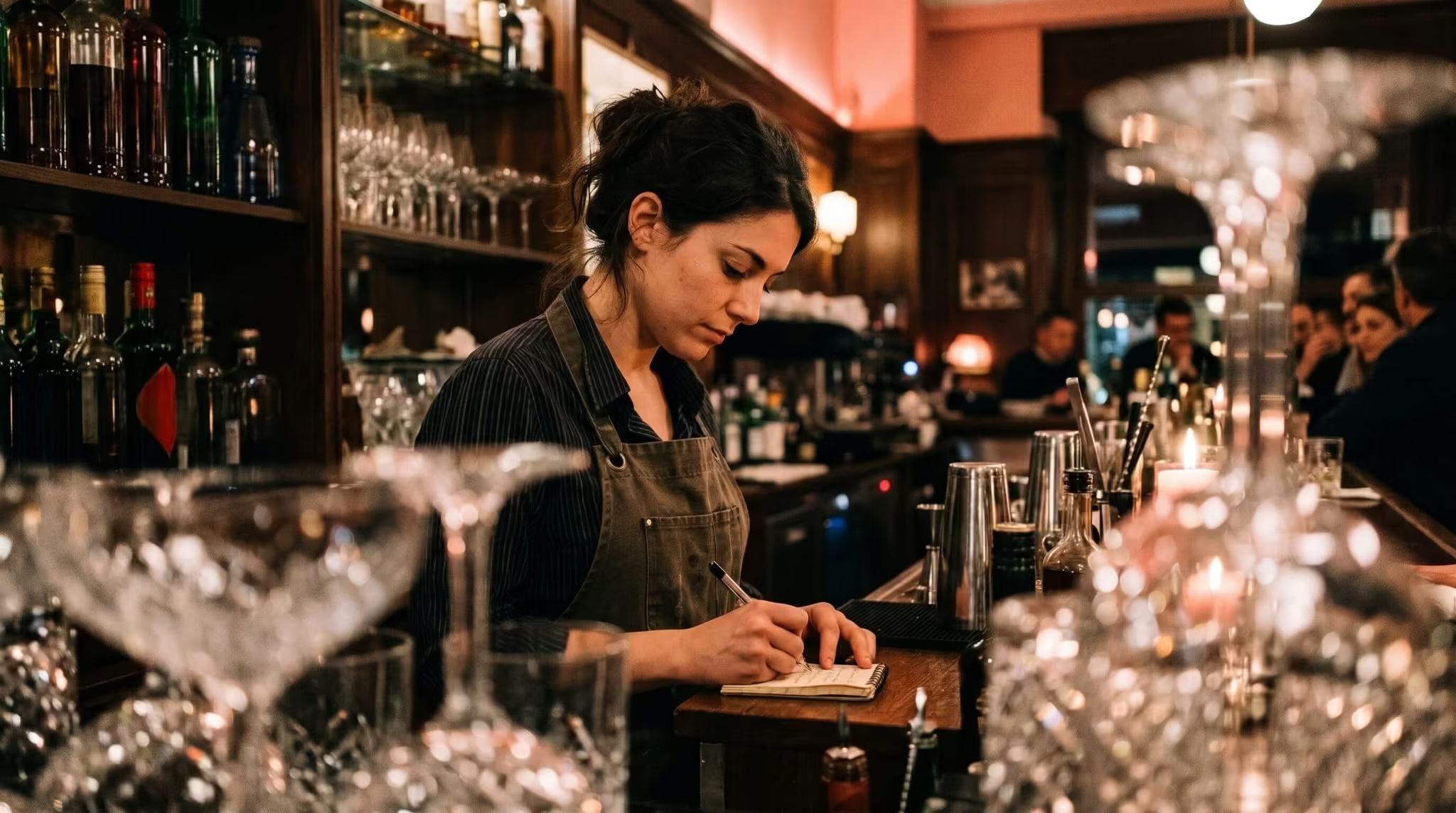
The counter is the heart of the whole ritual. Everything is on display, prices are low, and the point is variety. You point, you eat, you talk, and then you decide whether to stay for another round or walk on to the next bacaro.
- Cicchetti are meant to be eaten in two or three bites, usually with your fingers
- Most are served on bread, grilled polenta or a small wooden skewer
- A small glass of wine, called an ombra, is the traditional thing to drink with them
How to order like a regular
There are no rules, but there are habits. Regulars rarely ask for a menu. They look at the counter, ask what is fresh today, and order two or three pieces at a time rather than everything at once.
- Start with baccalà mantecato, the whipped salt cod that Venice is known for
- Ask for a small glass of white with fish and a red with anything meaty
- Order in small rounds, so everything arrives warm and nothing is wasted
- Leave space for sarde in saor, the sweet and sour sardines that taste better a day old
"The best cicchetto is the one that just came out of the kitchen. Ask what is fresh, eat it standing up, and order the next one when you are ready."
The rhythm of a Venetian evening
A traditional cicchetti evening is rarely planned around one address. Friends meet near the first bacaro, order a small glass and choose whatever has just appeared on the counter. After ten or fifteen minutes they move through the calli to another bar, where the food, wine and crowd will be slightly different. The walk between stops is part of the meal, creating pauses that a long dinner never has.
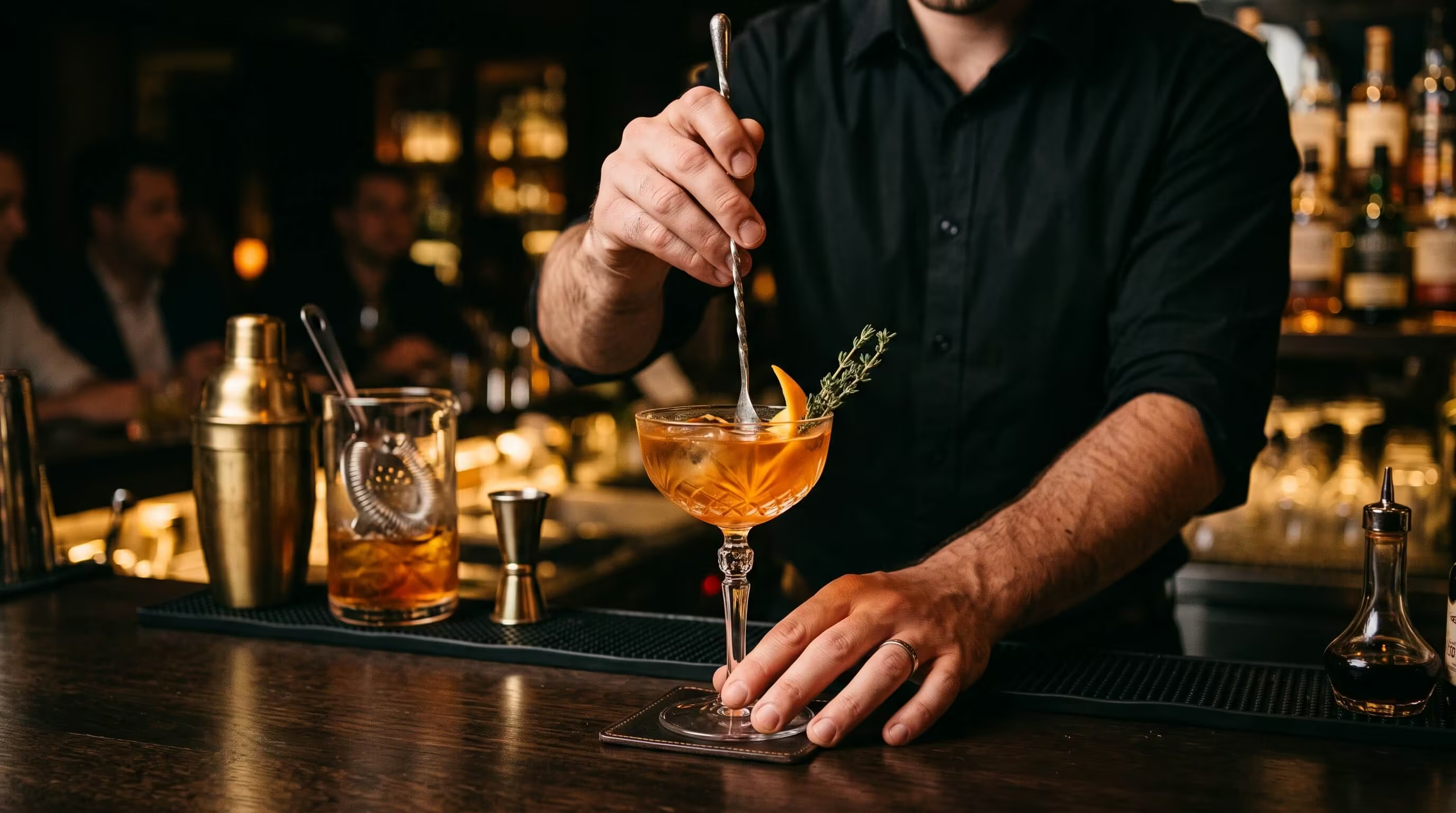
The ombra keeps that rhythm light. Its name is often linked to the shade once used by wine sellers around the Piazza San Marco, but today it simply means a modest pour of house wine. The glass is small enough to finish with one or two bites, and inexpensive enough that the next stop remains an easy decision. A spritz works too, although many regulars still begin with a local white.
Standing at the counter changes the social atmosphere. Orders are quick, strangers share space and the kitchen can send out small batches throughout the evening. There is no pressure to build a perfect plate at once. You can taste one thing, notice what has just arrived and order again when the conversation reaches a natural pause.
Building a balanced cicchetti plate
A good first round combines contrast. Start with something creamy such as baccalà mantecato, add something sharp like sarde in saor and finish with a warm, savoury bite such as a polpetta. Bread, polenta and crisp batter give each topping a different texture, while pickles and bitter leaves keep fried or richer fillings from feeling heavy.
Seasonality matters more than a fixed recipe. Spring may bring peas, artichokes and soft herbs; summer offers tomatoes and grilled fish; autumn belongs to mushrooms, radicchio and squash. The classics remain on the counter, but the best selection always includes something that could only have been prepared that week. Asking what is new is often the simplest way to order well.
At home, keep the portions small and make only three varieties rather than attempting a crowded buffet. Prepare one topping in advance, fry or toast one item just before serving and open a straightforward wine that suits the whole table. Put everything within reach and let guests eat in rounds. Cicchetti should feel generous and spontaneous, never like a miniature tasting menu.